SUMMER is HERE!
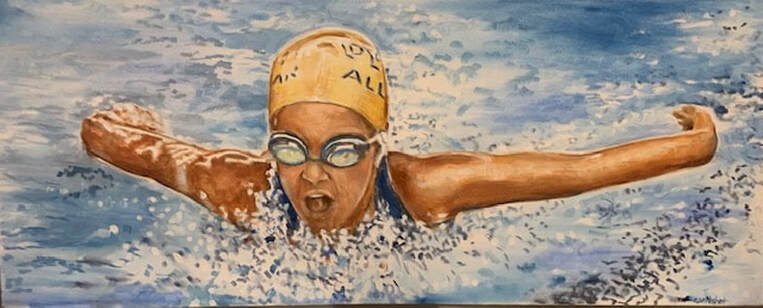
Exploring the Elements of Art and Principles of DesignSummer is a good time for me to s-l-o-w d-o-w-n, just (ahhh) breath, and take in the world around me. As an artist, I see and study with a curious and respectful eye. I analyze the visual things almost as a scientist might do. I tell my students to use their "science eye" and not only look but study. When studying and creating visual things, one has to break down the objects in front of them. When doing this there is a simple and categorical way of doing so, observing and using the Elements of ART. The Elements of ART are the building blocks to all things that pertain to visual "design." I believe there is a design to everything, manmade or not. Everything has shape, a line to define that shape, takes up space, has color, texture, value (light and shadow), and, in some way, has form. We use this science eye as a way to study what we are looking at and not what we think it should look like. When doing this I'm also using my MATHematician brain, comparing sizes and portions; looking at angles and curves! Yes, math is very cool! |
The Principles of DESIGN are how artists and designers might use the Elements of ART in order to create a work. When anything is created for the purpose of visual art or design, one must think of how to draw emphasis to something, a way to draw attention to something, such as in advertising or a portrait, for example.
The eyes that are looking at a work keep looking and investigating, allowing you to go from one moment to another in a visual piece. With the use of rhythm an idea, color, or shape has repetition. Pattern is doing the same thing but in a uniform manner. Unity is how it all comes together. All of these things mentioned can apply to the use of movement, causing the viewer's eye to roam around the composition, but it can also cause the thought of a potential destination, as the finish line, in the painting, "Butterfly Girl," above. Also, the use of contrast helps to create the mood and definition of the subject, with use of color and value. |
Exploring with Different Medium
I enjoy using the Procreate app on my iPad to do a preliminary digital sketches. This particular sketch was motivation for a painting (see below images). I love watching the timelapse replay. I decided to edit it in iMovie, adding script and music as an inspirational piece. This is something that I have been exploring with over the last year and excited about the possibilities to use in the classroom and for personal artwork! As always, good use of the elements of art and principles of design can be effective in any medium. Below is the video I created. Hope you enjoy!
Discussion point: space and shape to create emphasis
Same Theme, Different Medium
Like most artists, exploring a theme or idea to create a series of works, can be a great way to study. Creating preliminary sketches is a good way to take off the pressure and find the joy in creating. It is also a good way to work out spacing and dimension issues. I have found that doing sketches is an important part of generating the creative energy as well as saving time, eliminating the problems before taking on a more substantial piece. After creating the digital sketch, I was ready to put the imagery on canvas. Below are some images and explanation of the process of the beginning stages.
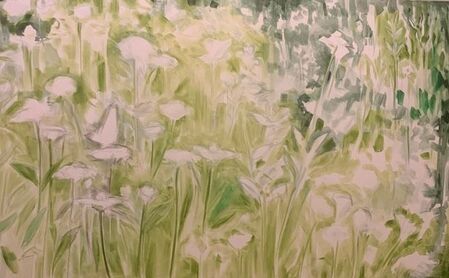
The Shape of SpaceWorking from my own personal photographs, I analyze the shape of not only the flowers but the spaces around the flowers. Above is the beginning, sketching in the "space" , using oil paint in values of green (thin layers to create value). This is a good way to cover the area and not get to caught up in detail.
|
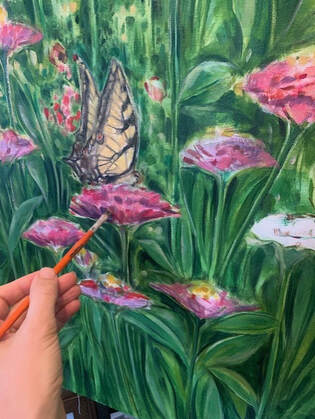
The Value of ShapeIn the image above, I am currently working on the detail of the flower, layering tones of color. This painting is not finished. I do plan to post a video, demonstrating the finishing stages. I am using oil paint medium for this particular painting, but acrylics or watercolors can be used as well.
|
Lesson Resources: Below are some clickable links that are worth exploring. It will allow you to explore some information about the Elements of Art, Principles of Design, and cross-curricular focus on art and mathematics.
|
|
|